




Supreme Court Cases for AP® Government and Politics – Plessy v. Ferguson
izzit Videos
Format: Streaming | Download
Length: 6:06
Grade Level: 9-12+
Closed Captioned: English
How did the Supreme Court's decision in Plessy v. Ferguson establish the doctrine of "separate but equal," and what were its long-term effects on racial segregation and civil rights in the United States?
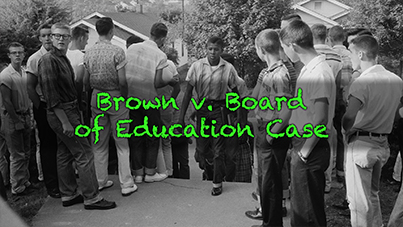
In the late 19th century, a Supreme Court case established the doctrine of "separate but equal," legitimizing racial segregation in public facilities. Homer Plessy, a man of mixed race, challenged Louisiana's segregation laws by refusing to leave a whites-only railroad car. Learn how the Supreme Court ruled that state laws requiring racial segregation were constitutional as long as the facilities provided to each race were equal. Understand how Justice Henry Billings Brown's majority opinion upheld the state-imposed racial segregation, which became a cornerstone for Jim Crow laws across the South. Plessy v. Ferguson had a profound and tragic effect on American society, but Justice John Marshall Harlan’s dissenting opinion laid the groundwork for the civil rights struggles that followed, ultimately leading to the Court’s overruling Plessy in Brown v. Board of Education in 1954.